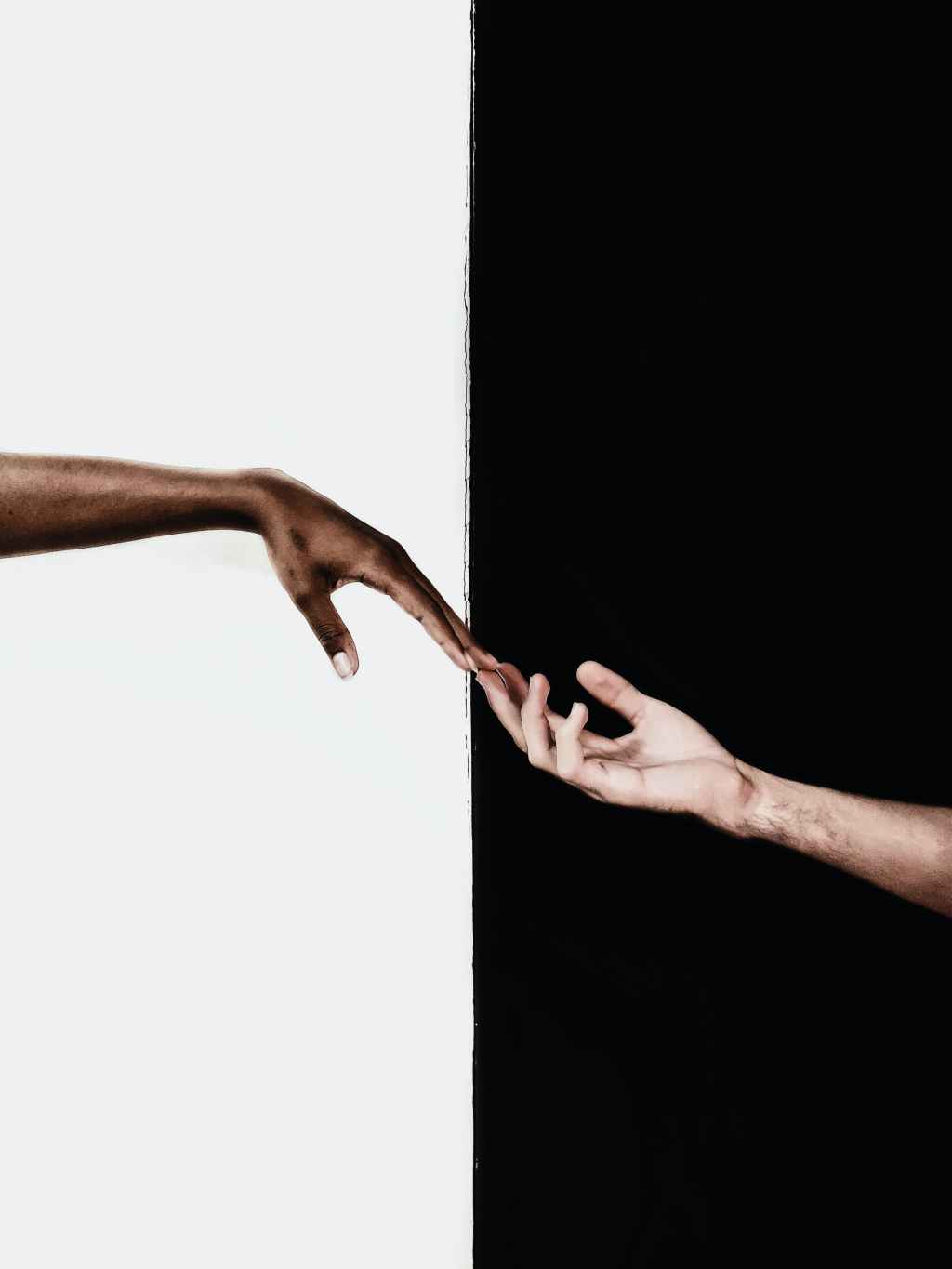
“Until the lion tells the story, the hunter will always be the hero,” the African proverb says. A few years ago, while I conducted my first workshop on diversity, inclusion, equity, and belonging in regulatory science in Germany, I asked participants from several European countries about the origin of these concepts. The room, brimming with bright minds, answered with a profound silence.
The room, brimming with bright minds, answered with a profound silence.
The quiet room didn’t reflect the brilliance of the curious minds present but instead highlighted Western education’s challenge of integrating science and the humanities. The latter two traditionally silenced lions’ stories while glorifying the hunters who many nowadays refuse to be. When I asked if my perplexed peers wanted to learn more, their curious eyes sparkled like scientists on the brink of a groundbreaking discovery. I became an impromptu teacher, sharing an overlooked perspective about global history starting in the USA.
As I stepped up, I thought about my multicultural childhood in the 1990s in France when my mother, a six-foot-tall outspoken woman, was an unofficial authority in decolonized history. She was born in the colonized French Congo in the 1950s and was among the few European heritage conservationists of African descent. She said, “Maybe there are more Black conservationists in the USA because Americans are ahead of us for representing humanity as it is instead of as some people dream it.” Indeed, American media portrayed diverse characters in France, while French media often relied on American shows. So, African American movie characters often represented African descendants, Asians, Pacific islanders, and any new-coming “non-Western” immigrants, except the extraterrestrial aliens. The latter already had their dedicated science fiction genre.
I spent many after-school hours in the dusty archives of Choisy-le-Roi, a small town near Paris. In this dark room, my African French mother taught me, and any sparkling willing soul, that European archivists and historians’ unchecked limited views shaped global history. “Think local; act global,” the unofficial motto of the European colonization of humanity’s reality echoed.
Western history and art narratives often underrepresented ethnic minorities, the LGBTQAI+ community, people with disability, humans living in poverty, women, and other humans that Western science’s sole binary logic degraded when it categorized humankind. Mom said, “It reflects the experts’ perception of that time. If we do not use critical thinking while curating history and art, we perpetuate the outdated belief that all those people didn’t exist or had a minor role in culture and history. Then, it helps to undermine their existence today, as if they were extraterrestrial aliens debarking from nowhere.”
As a nerdy gangly teenager, I absorbed invaluable lessons from my mother’s meticulous curation: silenced voices in media and art in the present may not belong to future history. Still, amidst the uniformity of French professional circles, one African-French heritage conservationist stood tall, defying a dehumanizing 500-year-old status quo. Alone in a Parisian suburb’s humble town hall’s gloomy room laden with musty old paper scent, she selected representative archives, ensuring no soul remained trapped in the shadow of someone else’s forgotten past. I admired my fiery mother for that.
Outdated beliefs are Western science’s most fatal enemy. Thirty years later, I stood tall in a bright room filled with brilliant minds, passing the torch to my fellow regulatory scientists. I explained how European colonization and Western science reduced humanity to a single standard dictated by a select group of experts’ uncritical, narrow viewpoints. Those highly-educated scientists’ reality blindness wanted to help humankind as our critical thinking tries to nowadays. So, I thanked my eager peers for upholding the principles of continuous scientific improvement by listening and self-reflecting on a unfamiliar topic.
I had only a three-minute elevator speech to explain 400 years of thwarted humanity’s natural diversity history to my peers. So, I gave them a quick rundown, starting in the USA with enslaved Africans fighting for freedom and equality (1619-1865) and the trailblazing colony’s liberation from Britain (1775 -1783). The abolition of slavery after the Civil War (1861-1865) and the modern Civil Rights Movement for desegregation and equality (1865-?) were pivotal moments. These reality-defining events occurred along with the global decolonization movement my Congolese French parents witnessed. In the 1960s, they heard Asians, Native Americans, Indigenous Australians, Pacific Islanders, the LGBTQAI+ community, people with disabilities, women, and many other unfettered voices. The fervent longing for freedom spread like a fire: a cultural revolution was born. It translated into affirmative action policies to include those diverse realities in the USA in 1964. Diversity awareness focusing on Inclusion, Equity, and Belonging has been the Civil Rights’ last successful development since the 1990s. It came to Europe through corporate America’s paramount global culture.
Indeed, humanity’s natural diversity and legitimate demands for equity questioned the egocentric standard that modern Western science validated for humankind during colonization. This global benchmark portrayed a wealthy, cis-heterosexual, non-disabled, disease-free, educated White European male with steadfast Christian morality, unwavering binary rationality, and unbreakable emotional restraint. Many aspects of modern Western science were built on this exclusive norm. Thus, Diversity, Inclusion, Equity, and Belonging were about scientific progress.
The farther humanity stands from the old colonial standard, the less visible it becomes in a 500-year-old artificial reality: each unchecked box adds an intense shade of invisibility. Responsible medical science means owning up to past mistakes and long-lasting harm to humanity, as the scientists I admire like Dr. Alvin Poussaint, do. He’s an American psychiatrist and US TV consultant whose Western science’s binary logic categorized as Black, the antagonism of White, even if our skin is unmistakably brown.
Since the sixties, Dr. Poussaint has focused on understanding racism and advocating for better representation of African Americans in media. His groundbreaking scientific work sheds light on the trauma caused by European colonization of humanity’s reality. Through multi-disciplinary collaborations, he’s helped re-humanize the American media perceptions, reaching many alienated people in my childhood in France, except for the acutal extraterrestrial aliens. In 2019, the globally renowned American Psychiatry Association recognized Dr. Poussaint’s five decades of advocacy for those with mental illness in marginalized communities with the prestigious Distinguished Service Award.
Often, acknowledgement comes late or never for those historically marginalized by Western science. Another scientist I admire, Irish-British physicist Jocelyn Bell Burnell, discovered the first radio pulsar in the universe in 1967 at 24. Despite her significant discovery advancing physics, the Nobel Prize committee only recognized her two male supervisors. So, in addition to her scientific achievements, Bell Burnell advocates for greater inclusion in science. I also admire Satyendra Nath Bose, an Indian polymath and quantum physicist who pioneered a new field in quantum statistics in 1924. While he did not receive the Nobel Prize for Physics, many other scientists were awarded based on his groundbreaking work.
In medical science, game-changing innovation often originates from patients. In the 1980s, patients with HIV and AIDS in the LGBTQIA+ community, particularly in the USA, were pioneers in advocating for affordable life-saving treatments with manageable adverse reactions. Their collaboration with scientists led to the revolutionary development of anti-HIV triple therapy in the 1990s. This co-creative collaboration paved the way for patient advocacy in other medical fields, promoting innovative treatments. It became especially critical for isolated patients living with understudied rare diseases. Finally, patient experiences also played a crucial role in including quality of life as a standard consideration in global drug development.
Western science historically prioritizes future product-centric innovations and overlooks past instances of transformative human-centric leadership. So, when the ardent scientists and patients I mentor feel disheartened by their unnoticed efforts, I remind them of Albert Einstein’s experience. The Jewish German American WWII refugee and physicist introduced the theory of relativity in 1905, 3,000 years after Dharmic Indian philosophy and science described the concept through the Vedas, the Hindu scripture. He never received the Nobel Prize for it, only for his relatively obscure discovery of the law of the photoelectric effect in 1921. Understandably, he skipped the award ceremony, privileging more important engagements, including a lecture tour in Japan. So, I reassure them, saying, “It’s not your invisibility. It’s instead an outdated system’s reality blindness that has persisted for 500 years.”
Today, we learn about the courageous lions’ past unnoticed significant scientific contributions thanks to critical historians, cultural studies scholars, journalists, writers, and artists, many fitting the invisible benchmark that Western science’s binary logic set for humankind. While refusing to become today’s glorified hunters, they create space for these remarkable stories, elevating all humanity to whom they acknowledge they also belong.
Responsible science isn’t only about correcting the past. It’s also about making science more objective, universal, and humane. In medicine, it can be a matter of life or death. I sadly witnessed it, as I recounted in, “Western science’s magical thinking.” So, I feel grateful that my peers’ ardent souls created space for my enlightening account during that workshop in Germany. Indeed, not everyone is willing to expand the safe narrowed perception that the reality blindness of the colonization of humanity’s reality left. And without a spark, there’s no fire.
Learning about the history of freedom and self-empowerment has shown me that authentic leadership means opening doors and leaving them wide open for others. So, feel free to join the conversation in the immersive reader version of this post on LinkedIn. Wishing a happy, self-reflective US Black History Month to all lions and inclusive storytellers worldwide.

 Reappearance