Every Friday until summer vacation, I’ll share a book that cracks open the foundations of medical science so you can compile a reading list for the summer break. This series honors the artist-researchers with whom I collaborate as a science decolonization writer and self-declared epistemo-pathologist (a term I use to diagnose and dismantle harmful knowledge systems—and the deliberate ignorance they sustain—while healing the realities they impact).
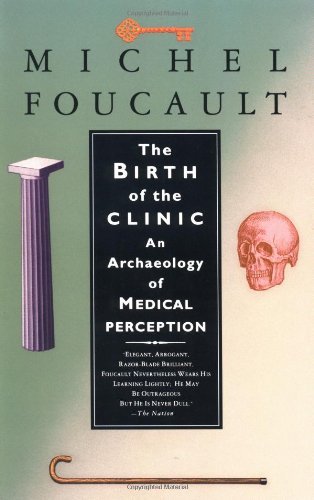
These collaborators are patients living with diverse conditions who wield creativity to interrogate medical systems—and their curated texts. First up: Michel Foucault’s The Birth of the Clinic: An Archaeology of Medical Perception, a postmodern classic critiquing how Western medicine constructed its authority. Here’s why it matters:
Summary: Cracking Open the Medical Gaze
Foucault’s 1963 work dissects the 18th–19th century shift that birthed modern clinical medicine in the West. He reveals how the “medical gaze” transformed bodies into objects of study, divorcing illness from lived experience and reducing patients to pathologies. Key themes:
From Mysticism to Mechanization
Pre-modern medicine viewed disease as a spiritual imbalance; the clinic reframed it as a spatial, anatomical puzzle. Autopsies became tools to map illness onto organs, erasing patient narratives in favor of “objective” observation.
Biopolitics of Control
Hospitals evolved from shelters for the poor to laboratories of state-regulated surveillance—a shift mirroring colonial projects that embedded power dynamics into diagnosis and treatment.
The Myth of Neutral Science
Foucault argues medicine’s “progress” was less about truth than consolidating professional authority. Rituals like bedside exams naturalized hierarchies between healer and patient.
Why Artist-Researchers Champion This Text
For those using art to reclaim agency in healthcare, Foucault’s analysis is a rallying cry. The medical gaze mirrors colonial frameworks that dehumanize marginalized bodies. By exposing medicine’s roots in control, Foucault equips us to ask:
- Whose stories vanish when health becomes a dataset?
- How do we recenter humanity in diagnosis and care?
Artist-researchers—like those who recommended this book—use poetry, visual art, and performance to disrupt these paradigms, weaving illness back into identity and community.
What to Expect This Week
👩⚕️ Healthcare professionals: How does the “gaze” shape your practice? How do protocols silencing patient voices?
💊 Pharma/regulatory experts: How do R&D pipelines prioritize “efficacy” over embodied trauma?
✊ Patient advocates: What hierarchies must we dismantle to amplify lived experience as expertise?
Join the Dialogue
🗣️ How does Foucault’s critique resonate with your work? Share below or tag a colleague. Let’s unlearn together.
For deeper dives into decolonizing medical narratives: reappearance.blog.
➡️ Next Friday: Ed Cohen’s A Body Worth Defending—what happens when medicine frames immunity as warfare? 🛡️

 Reappearance
3 responses to “🌿 Summer of Unlearning: A Reading Series for Reimagining Healthcare – Week 1 – Michel Foucault’s The Birth of the Clinic: An Archaeology of Medical Perception.”
[…] ➡️ Missed Week 1 on Foucault? [Read it here] […]
LikeLike
[…] Week 1: Michel Foucault’s The Birth of the Clinic […]
LikeLike
[…] Michel Foucault’s classic Birth of the Clinic, we carried out an archaeological field survey of the Western medical perception. We heard the […]
LikeLike