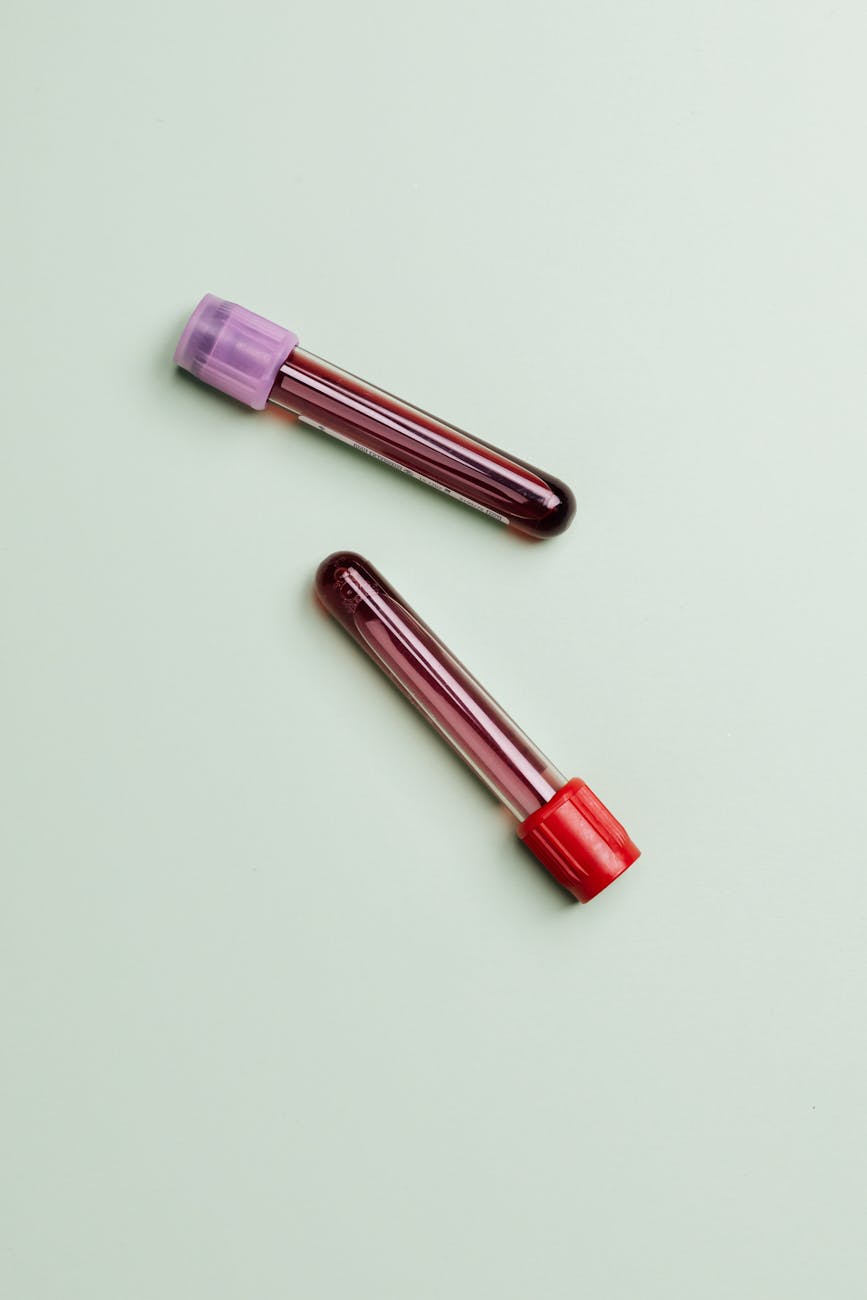
The Scientific Imaginaries of Blood Disorders
Following the success of the Summer of Unlearning, A Series to Reimagining Healthcare, we will zoom in on a condition labelled by Western science to understand its underlying scientific imaginaries. Inspired by this series, we will continue with blood—perhaps the most imagined substance in Western medicine.
Introduction — from the inside of blood
For people who live with blood disorders, medicine is not something we visit.
It is something that visits us — in our veins, our families, our futures, our reproductive lives, our immigration files, our school records, our job applications, our dating histories. When we let it in, it never leaves. It occupies us with a reductive label, a diagnosis.
We do not encounter healthcare as neutral and objective science because 400-year-old modern Western science is neutral, objective, and universal only in theory, the labs, and experts’ minds, never in practice, lived experience, and in the patients’ bodies. It’s what countless historical records recount until today, and will in the future until science stops being seen as modern.
In this context, understanding the hidden stories that are still shaping Western science and its experts’ imagination is critical to understand the patients’ experience in the clinics.
Only then can we foster a healthy environment where patients and their constellation of meaningful relations can be effectively empowered to hold onto their humanity in Western science—a discipline that has voluntarily imputed its humanity for a quixotic centuries-old quest for theoretical neutrality, objectivity, and universality. Western science became emotionally illiterate.
As Western science traded emotional literacy for technical literacy, patients with blood disorders encounter it as modern Western science is rooted: a colonial technology. It sorts our blood into:
- valuable or disposable
- pure or contaminated
- treatable or too expensive
- worthy of care or too risky
Long before we meet a doctor, our blood has already been imagined for us.
Those imaginaries were not created by us.
They were built through European racial science, Christian purity politics, eugenics—the debunked science of improving and standardizing humanity through normalizing whiteness— population management, and imperial medicine. Then, those narratives were exported across the globe as “modern healthcare” through colonization. They became a hidden historical script erased by emotional amnesia and technical remembrance.
So when a child with sickle cell enters a hospital,
when a menstruating person bleeds uncontrollably,
when a gay man with HIV seeks care,
when a migrant with thalassemia applies for a visa —
they are not just treated medically.
They are read through centuries of colonial meaning about blood.
This is why blood disorders hurt in ways that have nothing to do with hemoglobin or platelets.
They hurt because:
- our pain is doubted
- our bleeding is normalized
- our lives are calculated
- our futures are priced
- our reproduction is regulated
- our ancestry is turned into risk
The following sections do not describe blood disorders as biology.
They describe how Western science has imagined blood — and how those imaginaries shape who gets to live, be believed, and be cared for.
1. Blood as Ancestral Essence
(Race, heredity, destiny)
Western biomedicine has long imagined blood as a carrier of racial truth.
This turns blood disorders into racial signatures instead of evolutionary, environmental, and social phenomena.
Sickle cell: what it means for each group
Sickle cell is the clearest example of this racialized imaginary.
The mutation that causes sickle cell is an adaptation to malaria, not to race. It evolved independently in:
- West & Central Africa
- The Mediterranean
- The Middle East
- South Asia
But Western medicine framed it as a “Black disease.”
For African-descendant patients
- Their pain is treated as “expected”
- Their crises are dismissed as drug-seeking
- Their lives are imagined as biologically limited
- Their suffering is naturalized rather than treated
This pattern is documented across pain-bias and care-access research summarized by Centers for Disease Control and Prevention and National Institutes of Health.
For Mediterranean, Middle Eastern, and South Asian patients
- Their sickle cell is misdiagnosed or diagnosed late
- They are treated as “rare anomalies” rather than part of the disease’s real geography
- They often go years without appropriate care because clinicians are not trained to see sickle cell in them
For white carriers
- Their genetic status is often invisible
- They are not socially marked as “sick” or “at risk”
- The racial stigma is displaced onto others
So the same mutation produces entirely different medical and social realities, based purely on racialized imagination.
2. Blood as Moral Ledger
(Purity, contamination, deservingness)
Here blood becomes a moral substance. Some patients are framed as innocent victims; others as guilty carriers.
This is visible in HIV, hepatitis, hemophilia, and transfusion-linked disorders.
What it means for patients
People with hemophilia infected through contaminated blood products
Many people with hemophilia in the 1980s–90s were infected with HIV and hepatitis C through government-approved clotting factors.
However, the moral framing they encountered did not originate with hemophilia. It came from how Western science first constructed HIV itself.
HIV was initially identified and framed as a sexually transmitted disease of gay men — a group already positioned in Western Christian and scientific history as morally impure. Because of this, HIV was imagined as a disease of guilty blood before it was ever understood as a blood-borne virus.
When it was later discovered that HIV could be transmitted through blood:
- Gay men continued to be framed as morally culpable carriers
- People with hemophilia were reframed as accidental carriers
- Both were still marked as having impure blood
This produced a false moral opposition:
“innocent impure blood” (hemophiliacs)
vs
“guilty impure blood” (gay men)
The stigma did not disappear — it was redistributed.
Both groups remained contaminated in the scientific imagination, but only one was granted conditional sympathy.
People living with HIV or hepatitis
- They face refusal of care
- They experience disclosure coercion
- They are treated as contagious risks rather than as patients
Women and menstruating people with bleeding disorders
Because bleeding is culturally coded as shameful, these patients are:
- underdiagnosed
- told their hemorrhaging is “normal”
- accused of exaggerating
- denied pain relief
This is especially severe for people with von Willebrand disease and platelet disorders.
So the moral ledger does not just divide ill vs well — it divides worthy vs suspect.
3. Bleeding and Gender
(The invisible blood-disorder imaginary)
Western medicine imagines bleeding as:
• normal in women
• pathological in men
This inversion was not accidental. Early Western hematology first encountered bleeding disorders through hemophilia, a hereditary condition observed in royal European bloodlines and passed through women but expressed in men. Because hemophilia produced dramatic, visible hemorrhage in male bodies, bleeding was coded as a tragic pathology when it appeared in men — and as natural, invisible, and unworthy of intervention when it appeared in women and menstruating people.
This unspoken legacy still shapes diagnosis, often erasing people who menstruate and have bleeding disorders.
Girls with hemophilia or von Willebrand disease are:
- misdiagnosed
- ignored
- traumatized by uncontrolled bleeding
Their blood is not treated as clinical — it is treated as shameful.
So gender becomes another filter through which blood is misread.
4. Blood as National Resource
(Whose blood counts? Who is worth saving?)
Modern states treat blood as a strategic asset.
Genetic screening and immigration
In many countries, sickle cell and thalassemia screening is tied to marriage, visas, and residency.
Patients from the global majority are told they are too risky to belong.
These practices are documented by World Health Organization and International Thalassaemia Federation.
Insurance and transplant access
Sickle cell patients are far less likely to receive transplants than leukemia patients.
Gene therapies exist — but not for most people.
What does it say? A cure exists. But not for you.
5. Blood as Molecular Machine
Genomics frames blood disorders as code errors.
But for patients, this creates a deep psychological burden.
In the scientific imagination, they live as:
- probabilities
- risks
- reproductive hazards
- future costs
Patients report anxiety, shame, and being reduced to their DNA.
6. Blood as Threat
Some blood disorders are treated as public dangers.
Registries, testing, and restrictions affect HIV, hepatitis, and carrier status.
People lose jobs, visas, and rights because of their blood.
These practices are documented by UNAIDS and Human Rights Watch.
7. What Is Missing: Blood as Living History
In global majority traditions, blood is memory, lineage, environment, and relation.
Western science severed itself from humanity in its quest for objectivity.
8. What Patients Can Do to Hold Onto Their Humanity
- Bring your story
- Write things down
- Name power
- Bring witnesses
- Share your meaningful story:
– Join patient organizations that have decolonized their advocacy and carved meaningful space for all experiences within a particular condition, not just for patients normalized by Western science
– Join patient-led scientific societies that have decolonized their research and carved meaningful space for all experiences, not just for patients normalized by Western science - Know your rights, not only the ones that institutions based on a 400-year-old dehumanizing discipline give you, but also the ones those institutions owe you.
5. Learn from the global majority — without theft
Cultures of the marginalized global majority kept humanity inside science.
Normalized Western science did not.
Learning ethically means to do better than Western science isn’t fit to do by design:
- supporting and empowering community-led care
- valuing and promoting oral history
- fairly compensating knowledge holders and respecting their time
- refusing extraction
Do this, and patients will not just survive medicine —
they will lead the next humane scientific revolution.
Why this matters
Blood disorders are not just biological.
They are colonial, racialized, gendered, and political.
Western science does not just describe blood. It colonizes it.
And when patients and their constellations are empowered to their very humane narratives, it rehumanizes and brings Western science one step closer to being trusted beyond the cold, dehumanizing data it generates to exist.
This transformation needs to happen fast, because patients’ dignity is Western science’s survival. It does because in the 21st century, humans don’t want their lives to be reduced to theories, data from labs generated by experts’ dehumanized minds. Many will rather forgo Western science than accept this normalized 400-year-old toxic reality.
So, let’s act upon the patients’ voices loud and clear.

 Reappearance